The journey of a sample from collection to scientific discovery
When people hear the term biological sample, most imagine an ordinary blood tube or a urine specimen sent for laboratory testing. However, this moment marks the beginning of a precisely defined and carefully monitored process that can significantly influence not only diagnostic results, but also the quality of future scientific research. This process is known as the life cycle of a biological sample and encompasses every stage from collection, processing, and storage to its further use or safe disposal.
Understanding and properly managing this life cycle is a fundamental prerequisite for modern diagnostics and biobanking. These approaches ensure that biological samples serve not only to address a patient’s current health condition, but also become valuable sources of information for future clinical and research purposes, thereby contributing to the advancement of personalised medicine and the protection of the health of future generations.
Biobanking: When medicine looks to the future
Biobanking represents a systematic and standardised approach to the collection, processing, and long-term storage of biological samples together with the clinical and demographic data that provide them with scientific and medical value. The core idea of biobanking is straightforward: a biological sample that is properly and carefully preserved today may one day provide answers to questions that did not even exist at the time of its collection.
Unlike conventional laboratory storage facilities, biobanks operate as complex infrastructures dedicated to the long-term preservation of samples under strict professional, technical, and ethical standards. Every biological sample is uniquely identified, thoroughly documented, and fully traceable throughout its entire life cycle. At the same time, it is linked to relevant data that enable its meaningful and secure use in scientific research and clinical practice.
Through biobanks, researchers are currently gaining deeper insight into the genetic risks of chronic diseases, differences in disease progression among populations, and individual patient responses to treatment. A biobank is therefore not a passive archive of samples, but a dynamic and active tool of modern medicine that significantly contributes to the development of personalised diagnostics and treatment.
Sample collection: The defining moment
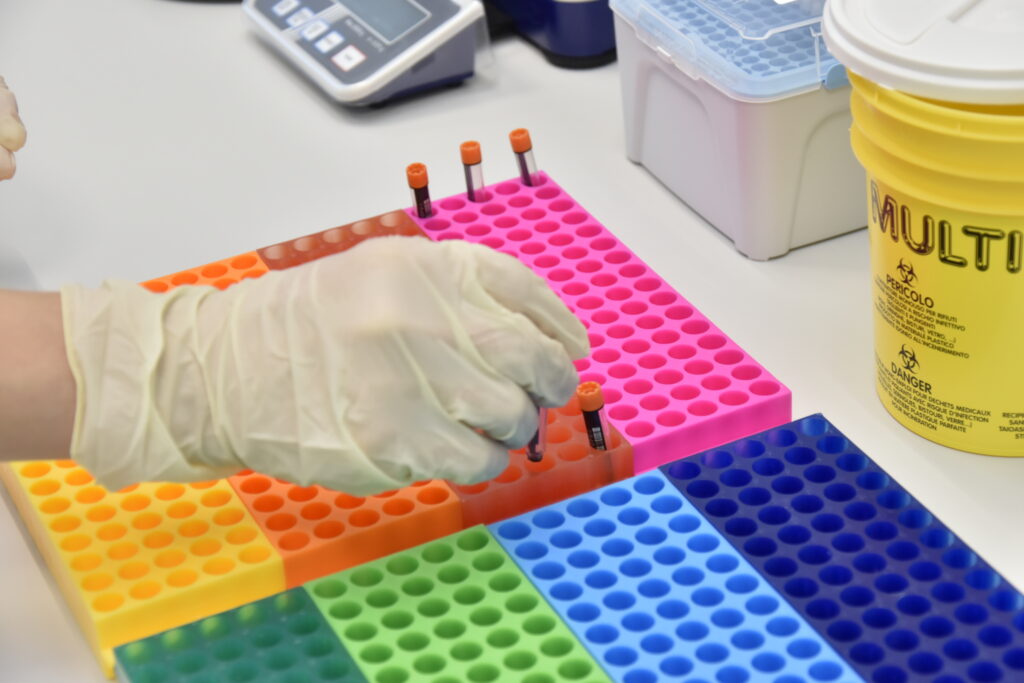
The collection of a biological sample represents a unique step that, in practice, cannot be repeated and at the same time forms the foundation for the entire subsequent life cycle of the sample. Before collection itself, however, the process is preceded by a professional consultation with a physician or healthcare professional, during which the donor or patient is informed about the purpose of the collection, the nature of the sample being collected, the methods of processing, and the possibilities for its future use.
An integral part of this process is the signing of informed consent, through which the donor confirms that they have been clearly informed about all relevant aspects of the collection, storage, and potential future use of the biological material, including its use for research purposes in accordance with applicable ethical and legal regulations.
The collection process itself establishes the basis for all subsequent stages of sample processing and storage. Errors introduced at this stage are carried forward throughout the entire process and, in most cases, cannot be fully corrected even through additional processing measures. The quality of sample collection therefore fundamentally determines the suitability of the biological sample for both diagnostic and research purposes.
Numerous factors influence the quality of collection, including the type of collection tube used, the presence and type of additives, the timing of collection, the patient’s current health condition, and even circumstances such as body position or fasting status. Incorrect procedures may lead to undesirable changes in the composition of the biological material before it even reaches the laboratory. For this reason, the collection of a biological sample is not merely a routine healthcare procedure, but a complex professional process with a direct impact on the quality, interpretation, and long-term value of the resulting data.
The pre-analytical Phase: A hidden influence on results
The period between the collection of a biological sample and its actual analysis is referred to as the pre-analytical phase and is critically important for maintaining the stability of biological material. It primarily includes sample transport, the time interval before processing, temperature conditions, centrifugation parameters, and preliminary sample handling.
Even relatively small deviations during this phase may lead to changes in the concentrations of analysed substances, degradation of sensitive biomarkers, or distortion of analytical results. For this reason, biobanks devote exceptional attention to the pre-analytical phase and implement standardised operating procedures, automated processes, and continuous monitoring of key parameters to minimise variability and ensure the high quality of stored samples.
Processing and aliquoting: Extending the life of a sample
After processing, biological samples are often divided into smaller volume units known as aliquots. This approach allows repeated use of the sample without the need to repeatedly thaw the entire specimen, thereby minimising degradation of the biological material and preserving its quality. Aliquoting is therefore a key step in ensuring long-term stability and reproducibility of results.
A single biological sample can thus be used for multiple analyses at different time points, including analyses based on methods that may not even have existed at the time the sample was collected. Proper and standardised processing significantly increases the scientific value of the sample and greatly expands the range of its potential applications in both clinical and research settings.
Storage: Stability under extreme conditions
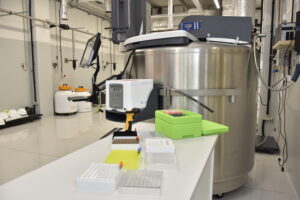
Long-term storage of biological samples takes place at very low temperatures, most commonly at −80 °C or under cryogenic conditions using liquid nitrogen. In addition to direct immersion in liquid nitrogen, storage in the vapour phase of liquid nitrogen is increasingly used in practice, where samples are maintained at temperatures below −150 °C without direct contact with the liquid phase. This storage method reduces the risk of contamination while ensuring high stability of biological material.
Under such extreme temperature conditions, biological and enzymatic processes are virtually halted, allowing long-term preservation of sample integrity, molecular structures, and analytical usability for years or even decades.
However, storage involves far more than simply placing a sample in a freezer. Equally important is accurate and reliable documentation of the sample’s location, storage conditions, handling history, and current status. A biological sample without clear identification, traceability, and documentation loses its scientific and informational value, even if it remains biologically intact.
Data: The essential context of a sample
A biological sample gains true significance only when linked with high-quality and reliable data. Information about the patient, diagnosis, treatment, and disease progression provides the essential context required for the correct interpretation of the sample and for meaningful comparison with other cases in both clinical and research environments.
For this reason, biobanks rely on complex information systems that ensure accurate documentation, traceability, and long-term data management in accordance with professional and ethical standards. The protection of personal and sensitive data, their secure storage, and controlled access are just as important as the quality of the biological material itself, since only their mutual integration enables the full and responsible use of biological samples.
The end of the life cycle – or its continuation?
The life cycle of a biological sample formally concludes when the sample is fully utilised or safely and intentionally disposed of. In many cases, however, its significance extends far beyond the physical existence of the sample itself and continues through published scientific findings, new diagnostic approaches, or improved therapeutic strategies.
Each biological sample captures a unique biological state of an individual at a specific moment in time. Through biobanks, these individual “frozen moments” become interconnected into a vast body of knowledge that enables deeper understanding of disease mechanisms, identification of new biomarkers, and more effective preparation of medicine for future challenges.
Biobanking therefore transforms individual samples into collective value with long-term benefits for both science and society.