Biobanking: The future of better healthcare
Biobanks play a key role in advancing medical research, developing new therapies, and supporting personalized medicine. These valuable depositories of biological samples and associated data enable researchers to study disease mechanisms on a large scale without the need for lengthy collection of sufficient sample volumes, continuous monitoring of sample quality, or management of storage conditions. Researchers can therefore focus directly on generating new scientific knowledge and applying it in healthcare.
What is Biobanking?
Biobanking involves the collection, processing, storage, and distribution of biological samples and related data for research and medical purposes. At first glance, this may seem straightforward, but each step requires numerous processes, agreements, and regulatory measures.
Biobanks must comply with strict legislation, ethical principles, and international quality standards to ensure the protection of donors, their data, and the samples themselves. This requires modern technologies, continuous environmental monitoring, automated systems, and reliable data backup solutions.
A biobank is therefore much more than a “deep freezer.” It is a complex technological system integrating data registration and categorization, sample management, storage condition control, and communication among all involved stakeholders. Maintaining detailed records and audit trails is demanding but essential to ensure transparency and reliability. The result is a high-quality biological sample enriched with relevant metadata, increasing the reliability and reproducibility of research outcomes.
What types of biobanks exist?
Biobanks can be categorized according to several criteria.
According to the purpose of sample use
Biobanks are divided into research biobanks and therapeutic biobanks. The main differences lie in their purpose, governance, and legal framework:
- Research biobanks collect and store biological samples and data for scientific research purposes. They are often linked to specific projects and analyses approved by ethics committees. Their key objective is generating new knowledge for the public good.
- Therapeutic biobanks are established to support patient care, diagnostics, or treatment. They are frequently part of hospitals, especially transplantation departments. Samples are used directly for the benefit of patients. Their defining characteristic is direct clinical application with individual patient benefit.
According to health status and diagnosis
- Population biobanks collect samples from large groups of people to study disease prevalence, genetic diversity, and predisposition to illnesses. These biobanks often conduct long-term follow-up studies and comprehensive analyses of health and genetic risk factors.
- Disease-oriented biobanks focus on specific diseases and store samples from individuals affected by those conditions for targeted research.
According to the institution establishing the biobank
- Academic biobanks operate within universities or research institutions.
- Clinical biobanks are part of hospitals or healthcare providers.
Some biobanks specialize in specific types of material. For example, liquid biobanks focus on bodily fluids. Tissue banks preserve tissue samples obtained during surgical procedures, such as FFPE blocks, histological slides, frozen tissue samples, or tissues stored in stabilization solutions. In contrast, virtual (digital) biobanks do not provide physical samples but instead share metadata and analytical results.
How does sample donation work?
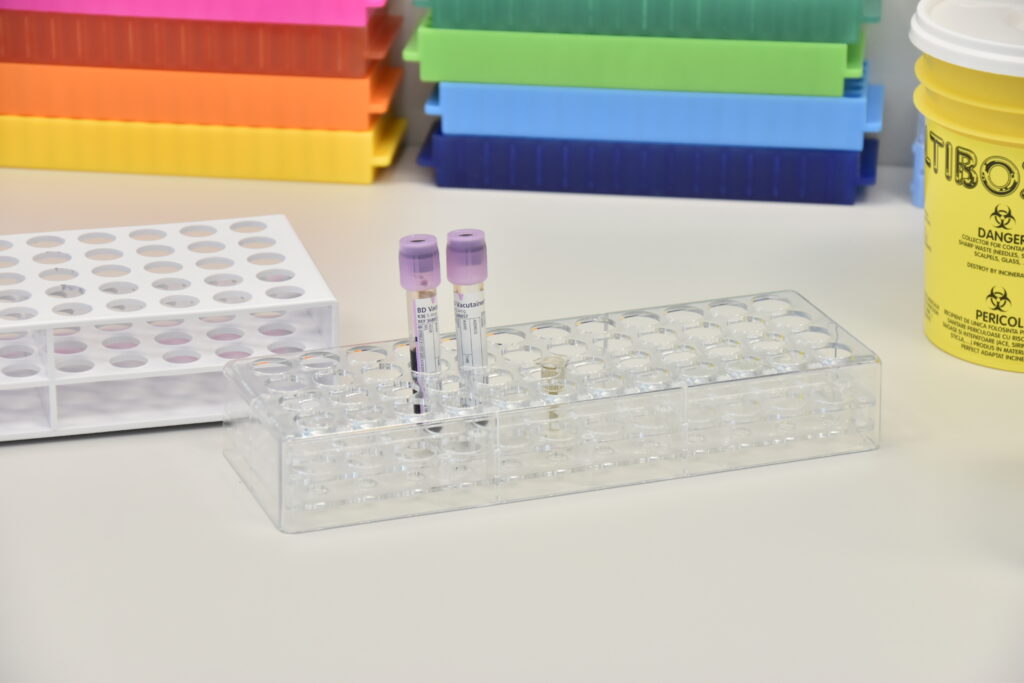
An essential component of biobanking is the donation of biological samples. These are often collected during routine medical procedures such as blood sampling, surgeries, or diagnostic examinations. With the patient’s consent, a portion of material that would otherwise remain unused may be stored in a biobank.
Donation is always voluntary and requires signed informed consent. Donors are informed about how their samples and data will be used. Protection of privacy is a fundamental principle – personal data are anonymized or pseudonymized to prevent identification of individual donors.
Thanks to these donations, unique collections of biological material and associated data are created, representing an invaluable resource for future research.
Conclusion: Why biobanking matters?
Biobanking represents a discreet yet essential pillar of modern healthcare. Although most people never come into direct contact with biobanks, their impact is reflected in the development of new treatments, more accurate diagnostics, and improved understanding of diseases.
Every sample stored in a biobank may one day contribute to a discovery that improves or even saves human lives. This is the true value of biobanking – connecting the individual contribution of donors with global progress in medicine.
Director of BBMRI.sk
Assoc. Prof. Zuzana Danková, MSc, PhD